Not long ago, GEO was rarely mentioned in client conversations. Now, we are seeing it included in more and more briefs.
It is easy to see why. Recent YouGov research found that one in ten UK adults now turn first to standalone AI tools for health information, advice or guidance.
But AI isn't only changing how people search through standalone tools. It is also changing the traditional search experience. People are no longer only typing a few words into Google and choosing from a list of links. They are asking full questions through tools such as ChatGPT or seeing AI-generated summaries within traditional search results, including Google’s AI Overviews.
An analysis by Pew Research Center found that when an AI summary appeared, people were almost half as likely to click on a traditional search result. This suggests that some people may be getting the information they need without visiting a brand or organisation’s website.
For health organisations, this creates both an opportunity and a risk. They may be visible at an important point in someone’s decision-making journey, but they may also be missing from the answer or described inaccurately.
So, how can organisations improve their chances of being found and represented accurately? This is where GEO comes in.
What does GEO actually mean?
GEO stands for Generative Engine Optimisation. Put simply, it is about improving the likelihood that an organisation and its expertise will be found and accurately represented within AI-generated answers.
It works alongside traditional SEO. SEO helps make website content accessible and discoverable in search, while GEO considers the wider information available about an organisation online.
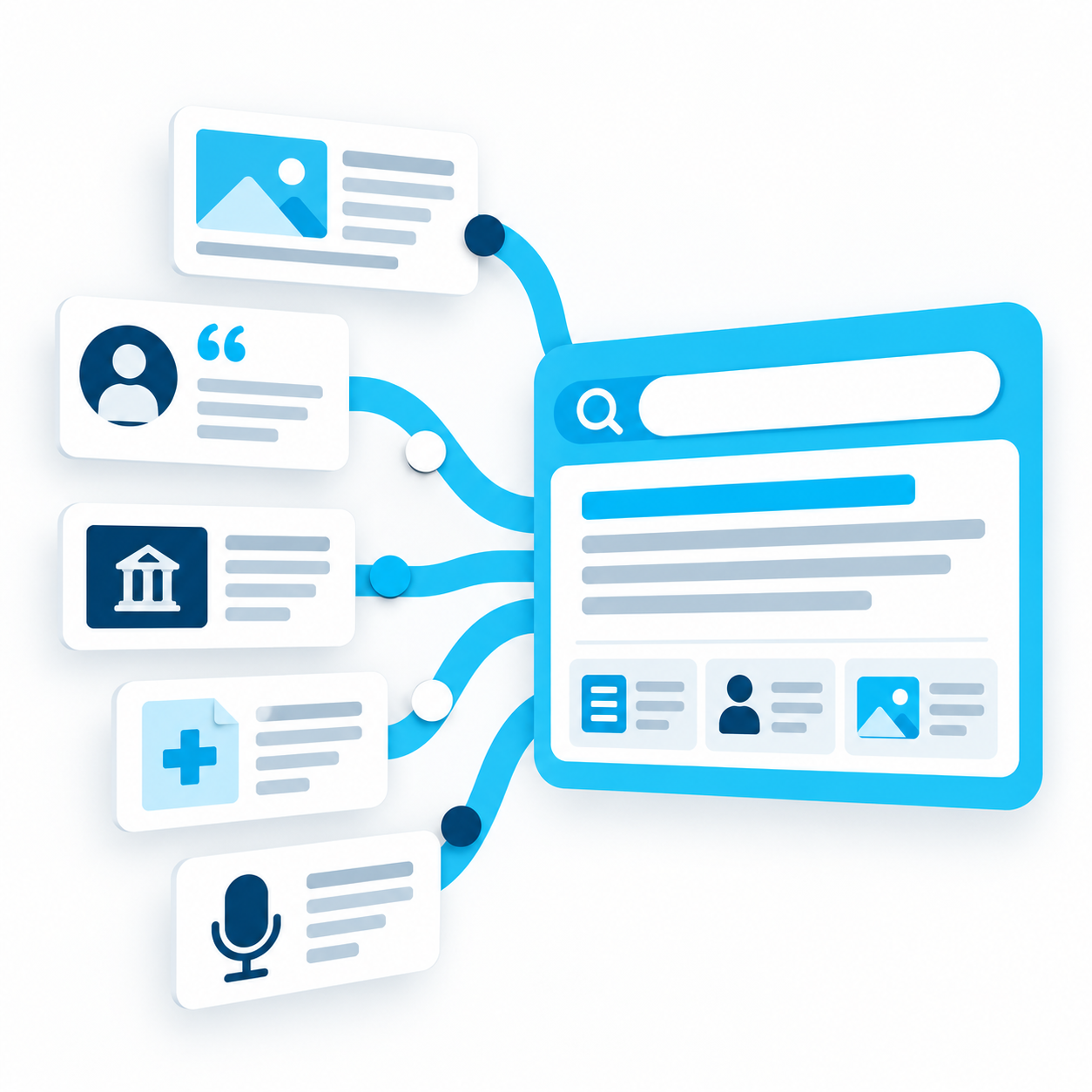
Depending on the platform and question, AI-generated answers may draw on or cite media coverage, expert commentary, professional bodies, reviews, retailer pages and video content. An organisation therefore cannot build visibility through its website alone.
We often find that clients already have valuable information and expertise, but it may be sitting in internal documents or spread across disconnected channels. The challenge is to make it visible in the places where audiences, journalists and search platforms are looking for it.
Why PR has such an important role
PR has always been about building visibility, credibility and trust. GEO gives each of those another form of value.
A health brand or service can describe itself as an expert on its own website, but independent media coverage provides additional credibility. When clinicians or specialists are regularly quoted by trusted publications, it helps build a stronger public record of an organisation’s expertise and the topics it can credibly contribute to.
For products, approved claims and core information should also remain consistent across websites, retailer pages, media coverage and creator content. For medical and pharmaceutical organisations, technical research can be made easier to discover and understand through clear source material, expert interpretation and accurate media coverage.
What should health brands and services be doing?
The starting point is to understand the questions people are asking. Search behaviour, website analytics, enquiries, reviews and journalist requests can all provide useful insight.
The questions will differ by organisation. They may relate to how a service works and who provides it, or what a product is designed to do and the evidence behind it.
These insights should shape media topics, website articles, expert commentary and social content. This creates a strategy based on genuine demand rather than filling a content calendar for the sake of it.
This is also where an organisation’s experts can play an important role. Clinicians and specialists can help answer the questions audiences are asking, while PR can build their profiles through commentary, interviews and thought leadership, supported by clear credentials and reliable evidence.
Wherever that information appears, the underlying facts need to remain consistent. The wording can change for different audiences, but service descriptions, approved claims, locations and expert job titles should align.
Clarity matters too. Press releases and website content must also be easy to understand. The main point should appear early, with research sources, relevant dates and important limitations clearly stated. Overly promotional language makes information less useful and harder for search platforms to interpret accurately.
Alongside this activity, organisations need a consistent way to understand how they are appearing within AI-generated answers.
What does good GEO measurement look like?
AI-generated answers can change depending on the platform, user or when the question is asked. A single search is therefore not enough to assess performance.
We recommend creating a manageable list of questions that reflect what patients, customers or healthcare professionals are likely to ask. These can be checked regularly across relevant AI tools, using the same wording and recording the platform and date.
This monitoring should consider:
Whether the organisation appears and how it is described
Whether the information is accurate and up to date
Which sources are being used
Which other organisations are included
AI visibility should then be considered alongside media coverage, website traffic, search performance and enquiries. Being mentioned by an AI tool is useful, but it does not automatically mean that someone trusts the organisation or intends to use its services.
GEO should be part of the communications strategy
GEO should not sit solely with an SEO or website team. It is affected by information published across media, websites, social channels, retailer pages and other public sources. Joined-up communications are therefore increasingly important.
Good GEO is not about manipulating an AI platform. It is about making an organisation useful, visible and credible wherever people are looking for information.
PR has a central role by building an independent media presence, bringing experts into relevant conversations and creating trustworthy information beyond an organisation’s own website.
Done properly, greater visibility in AI search should be an outcome of strong communications, not the only reason for doing them.
If you’d like to discuss how a joined-up PR and communications strategy could improve the online visibility of your health brand, service or organisation, please get in touch at hello@beyondpr.com.